Cities Entish and Otherwise
A late Old English poem and living stone

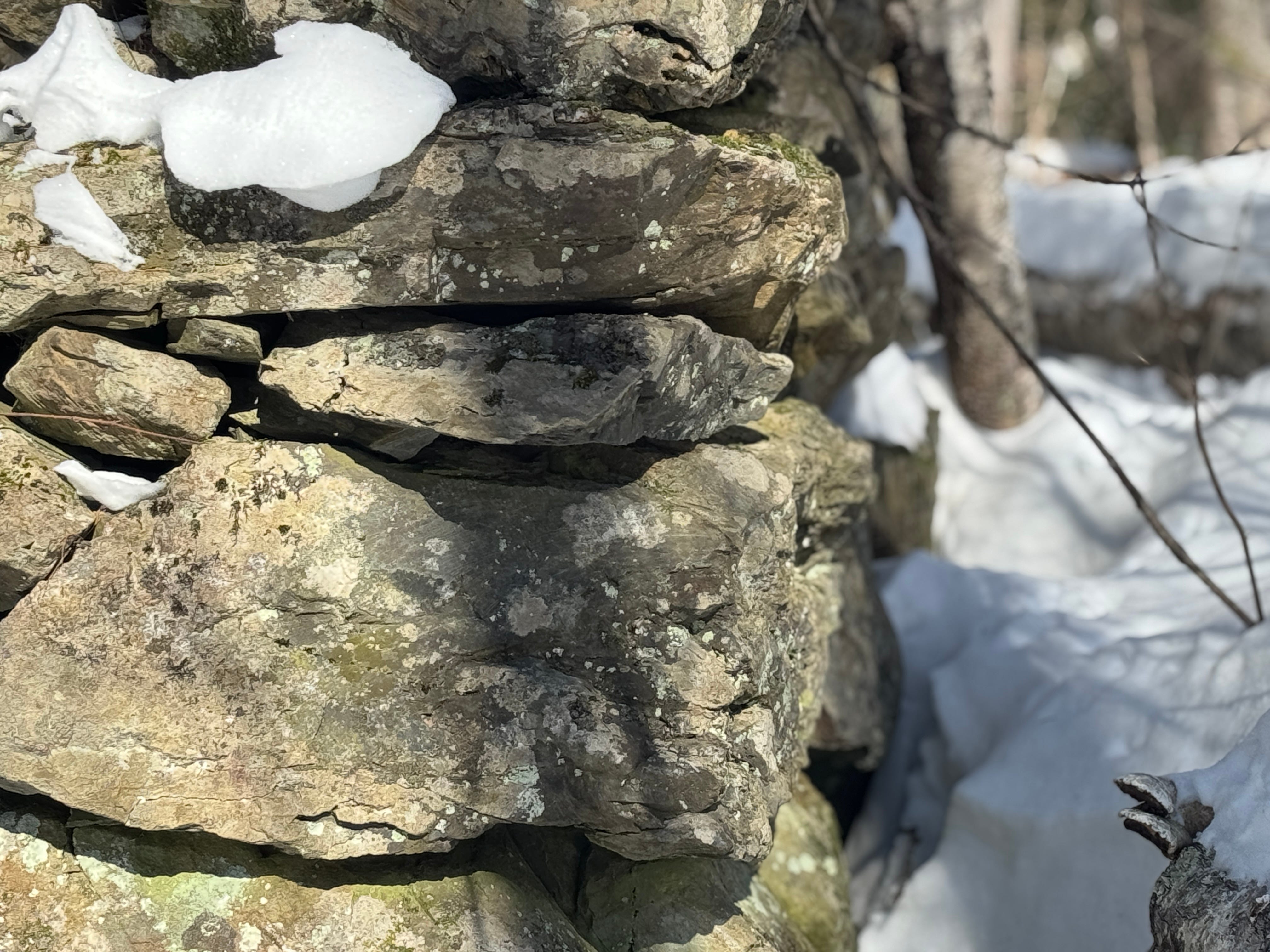
The first occasion where the phrase enta geweorc is likely to be encountered by a modern reader – in translation or otherwise – is in the poem The Ruin, where it features prominently in line 2:
Wrætlic is þes wealstan, wyrde gebræcon;burgstede burston, brosnað enta geweorc.
Wondrous is this wall-stone, worn down by fate;the courtyards crumbled, decaying giant-work.
Given the correlations of enta geweorc with visions of decay and ruin, it may seem to a modern reader that entish things must necessarily be broken or at least ancient. These associations, combined with a tendency – perhaps especially strong for newcomers to Anglo-Saxon poetry – to view the Anglo-Saxons as naturally melancholy, may lead readers to imagine these people as wandering through a broken, alien landscape which they only dimly understand.
In his 1999 book Of Giants: Sex, Monsters, and the Middle Ages, Jeffrey Jerome Cohen explores this experience, reading wood and stone as symbolic shorthand for Anglo-Saxon and ‘other’ civilizations, respectively. Here (from pg. 5) is his explanation of the significance of enta geweorc, and its relationship to the English landscape and its monuments:
When the various Germanic tribes that are now called the Anglo-Saxons arrived in the land now called England, they encountered towering structures of ancient stone that made them feel like small children as they stood beside them. They described this alien architecture as enta geweorc, “the work of giants.” Some of these structures were the great monoliths, dolmens, and stone circles such as Stonehenge built by the mysterious pre-Celtic peoples, who have left no other trace of their sojourn. Other monumental edifices were built by the Romans during the period when the Eternal City could see all the way to the hinterland of Great Britain. The aqueducts and temples of Bath, for example, had written Roman civility across a resistant wilderness, transforming the Celts into imperial subjects and the land into the empire’s dominion. But the memory of these builders (prehistoric and cloaked in mystery, Roman and clothed in history) had fragmented by the time the Angles, Saxons, and Jutes sailed in their war boats from Scandinavia, early in the fifth century. Since these Germanic tribes built their homes, sheep sheds, and mead halls exclusively from wood, stone in their sign system was associated with the primitive and the inert. Wood was a living substance to be carved and joined, the raw material of community; stone was recalcitrant and dead, good for etching runes but otherwise impossible to transform. Like their forebears, the Anglo-Saxons contrasted wood’s modernity with the ancient, elemental harshness of stone. Men built with wood. Giants, the vanished race who had ruled the earth in its larger-than-life, Peleolithic days, were architects of stone.
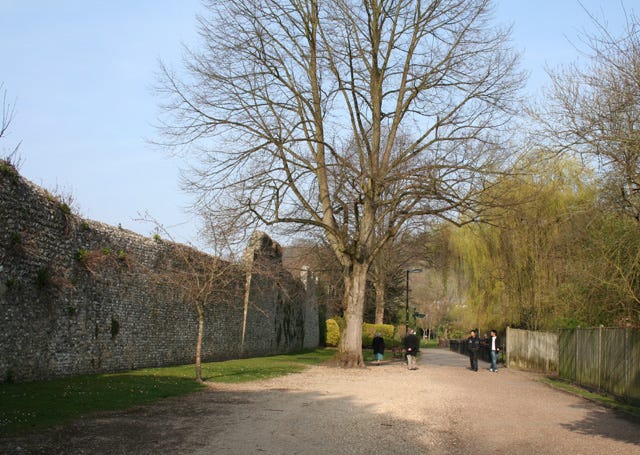
This is a compelling reconstruction, but the “stone=dead; wood=alive” dichotomy is too simplistic. For the monks of Benet Biscop’s day, who watched stonemasons brought in from the Continent raise churches in more Romanorum, stone was hardly dead or inert: rather, it was the medium of a living, international tradition. Something similar might be said for the men who built Alfred’s burhs in places like Winchester, atop and with Roman stone. At various points in Anglo-Saxon history, stone was central to the expression of the most current theological and political statements.
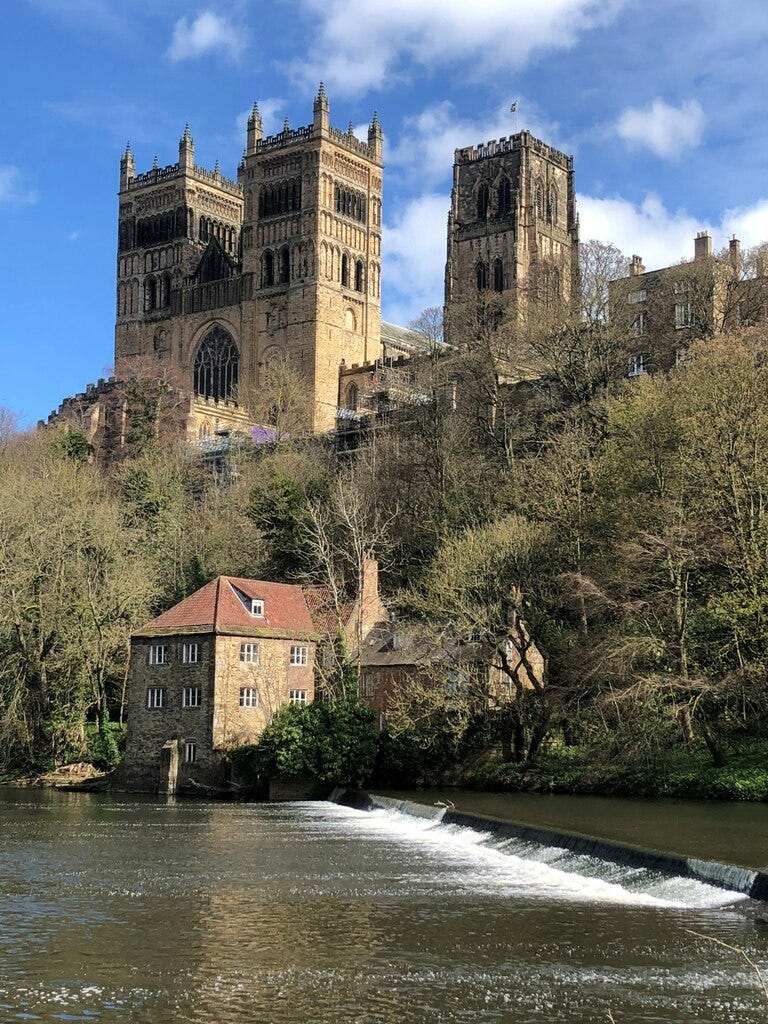
The late Old English poem Durham is a useful case for such comparison. Here is the poem in its entirety, followed by my modern English translation:
Is ðeos burch breome geond Breotenrice,steppa gestaðolad, stanas ymbutanwundrum gewæxen. Weor ymbeornad,ea yðum stronge, and ðer inne wunaðfeola fisca kyn on floda gemonge.And ðær gewexen is wudafæstern micel;wuniad in ðem wycum wilda deor monige,in deope dalum deora ungerim.Is in ðere byri eac bearnum gecyðedðe arfesta eadig Cudberchand ðes clene cyninges heafud,Osuualdes, Engle leo, and Aidan biscop,Eadberch and Eadfrið, æðele geferes.Is ðer inne midd heom Æðelwold biscopand breoma bocera Beda, and Boisil abbot,ðe clene Cudberte ond gecheðelerde lustum, and he his lara wel genom.Eardiæð æt ðem eadige in in ðem minstreunarimeda reliquia,ðær monia wundrum gewurðað, ðes ðe writ seggeð,midd ðene drihnes wer domes bideð.
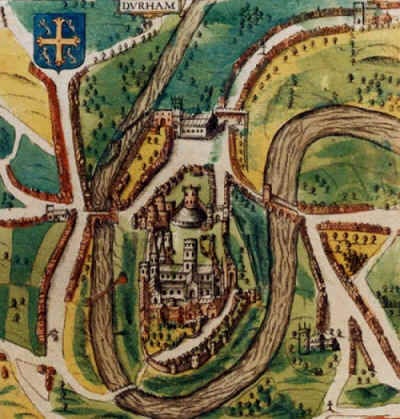
All Britain knows this noble city
established on the stony heights,
in wonder waxing. The Wear enfolds it
with a mighty current, where many kinds
of fish in the flood are found to dwell.
A great forest flourishes there;
in that fastness abide the beasts of the wild
in deep dales - deer uncounted.
And in that city, known to the sons of man,
lie blessed Cuthbert crowned in virtue
and the clean head of king Oswald,
England’s shelter; and Aidan, bishop;
Eadberch and Eadfrith - honored companions.
With them, inside, lies Aethelwold, bishop;
and bookman Bede; and Boisil, the abbot
who eagerly taught in the years of his youth
the bright Cuthbert – and quickly he learned.
Dwells with these saints a vast store of treasure
as writings reckon:
wonders they work there, the worthy relics;
the bones of the blessed biding Doomsday.
There are, of course, no giants here. But there is stone – and of a very different kind it is from the tumbled, dead stoneworks we find in The Wanderer or The Ruin. The stone in Durham is far from Cohen’s “recalcitrant”, “dead”, “primitive”, “inert” material. It lives and grows – gewæxen – along with the surrounding forest. In the cathedral, the relics of the saints – far from being inert or dead themselves, despite appearances - are as uncountable and (so the implication must go) as active as the wilde deor monige or feola fisca kyn that dwell in the wood and river thereabouts. Durham is the home of wundrum, if the books are to be believed. The spiritual liveliness of its material treasures, the relics, is witnessed by the superabundance of the earthly creatures – and by the activity of even the stones – that surround and constitute the place.
An idiosyncratic perspective? Maybe; Durham comes at the very end of the Old English alliterative verse tradition. But other poems indicate that stone - even ent work - could be central to a living community. The enta geweorc we see in Maxims II is one example. Rome itself - the burg enta of Elene - may be another.
These may be outliers, but they are enough to show that not all stone, and not all enta geweorc, was put to the same literary purpose. For of course not everything in the Anglo-Saxon poetic landscape was destroyed. Indeed, some of the poems celebrate the solidity, rather than mourn the transience, of buildings and cities. In modern times such celebrations of permanence have seemed less interesting to readers and critics. But they serve as a useful counterweight to the visions of ruin and destruction which have bulked perhaps too heavily in our sense of Old English literature.